A Culinary Journey Through the Heart of Central Asia
Kazakhstan, a vast and enigmatic land stretching from the Caspian Sea to the Altai Mountains, offers a culinary landscape as expansive and diverse as its geography. To truly understand this nation is to taste its history – a rich tapestry woven from the threads of a nomadic ancestral heritage, the bustling trade of the ancient Silk Road, and a mosaic of cultural influences. Kazakh cuisine is more than mere sustenance; it is a story of survival on the steppe, a testament to resourcefulness, and a profound expression of hospitality.
For many households, food is the central axis of life. In fact, food accounted for 55.4% of total consumer spending in 2024, a significant figure that underscores its cultural and economic primacy. This guide serves as your essential roadmap, navigating you from the soul of the steppe to the modern dining table, exploring the Kazakhstani foods that define this unique region.
The Influence of Nomadic Heritage and Silk Road Trade
Kazakhstani cuisine is a living chronicle of its past. The nomadic culture provides its foundational character – a diet rich in fatty meats and fermented dairy products, perfectly suited for a pastoralist lifestyle. However, Kazakhstan’s strategic position at the heart of Central Asia meant it was also a crucial crossroads. The legendary Silk Road was not just a conduit for goods like silk and spices; it was a highway for ideas and culinary traditions. This historic exchange introduced new ingredients like noodles and rice, gradually weaving them into the local diet and creating the layered flavors of Kazakh food we see today.
The Soul of the Steppe: Understanding Nomadic Roots
To appreciate the local flavors, one must first understand the nomadic people who birthed them. For millennia, the vast, open steppe was home to nomadic tribes whose lives were dictated by the seasons and the needs of their livestock. This existence forged a culinary tradition built on practicality and community.
A Way of Life: How the Nomadic Lifestyle Shaped Kazakh Food
The nomadic lifestyle demanded a diet that was portable, high in energy, and resistant to spoilage. Livestock – primarily sheep, horses, goats, and camels – were the lifeblood of the population. Consequently, traditional Kazakh cuisine is overwhelmingly pastoral. This reliance on animal products is still evident today, with meat consumption remaining high; the average per capita consumption of meat and meat products reached 82.6 kg in 2024.
Resourcefulness and Preservation
Survival on the steppe required incredible resourcefulness. Food preservation was not just a culinary skill; it was a fundamental survival strategy. Meat was salted, cured, and air-dried to create products that could last through long winters. Milk was transformed into a variety of products – from sour cheeses to fermented drinks – that extended its shelf life. This mastery of preservation gave rise to the robust, savory flavors that define the cuisine today.
The Iconic Mainstays: Essential Meat and Dairy Dishes
Meat and dairy are the heart and soul of the table. These dishes are symbols of wealth, community, and cultural identity.
Beshbarmak: The Symbol of Communal Feasting
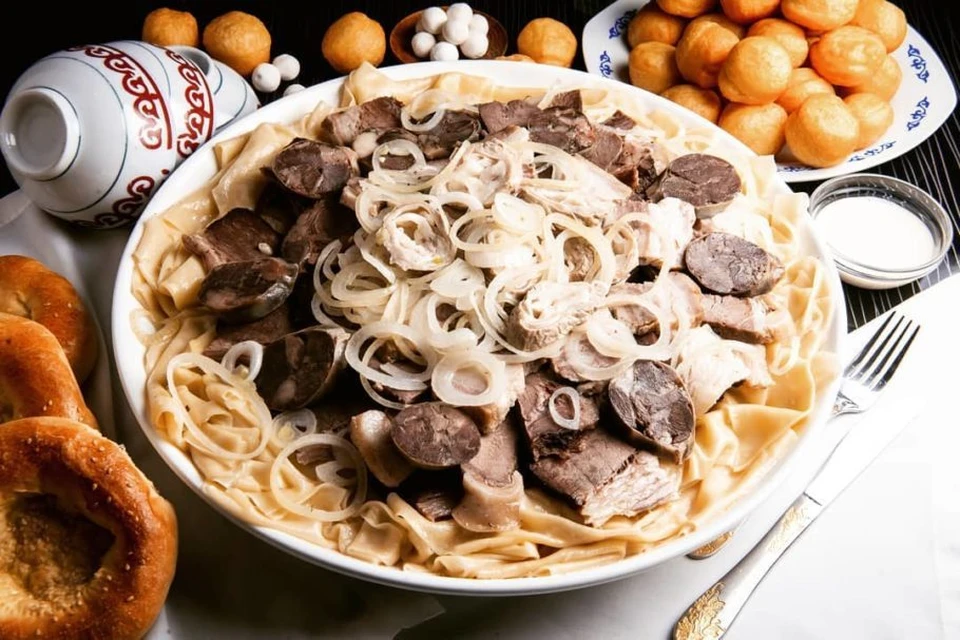
No exploration of Kazakh food is complete without Beshbarmak. Its name translates to “five fingers,” a nod to the traditional practice of eating the dish by hand. It consists of finely chopped, boiled meat (traditionally horse meat or mutton) mixed with large, thin pasta squares. Served on a large communal platter, often with a rich broth called sorpa on the side, Beshbarmak is a ritual of unity.
Kazy, Shuzhuk, and the Sausage Spectrum
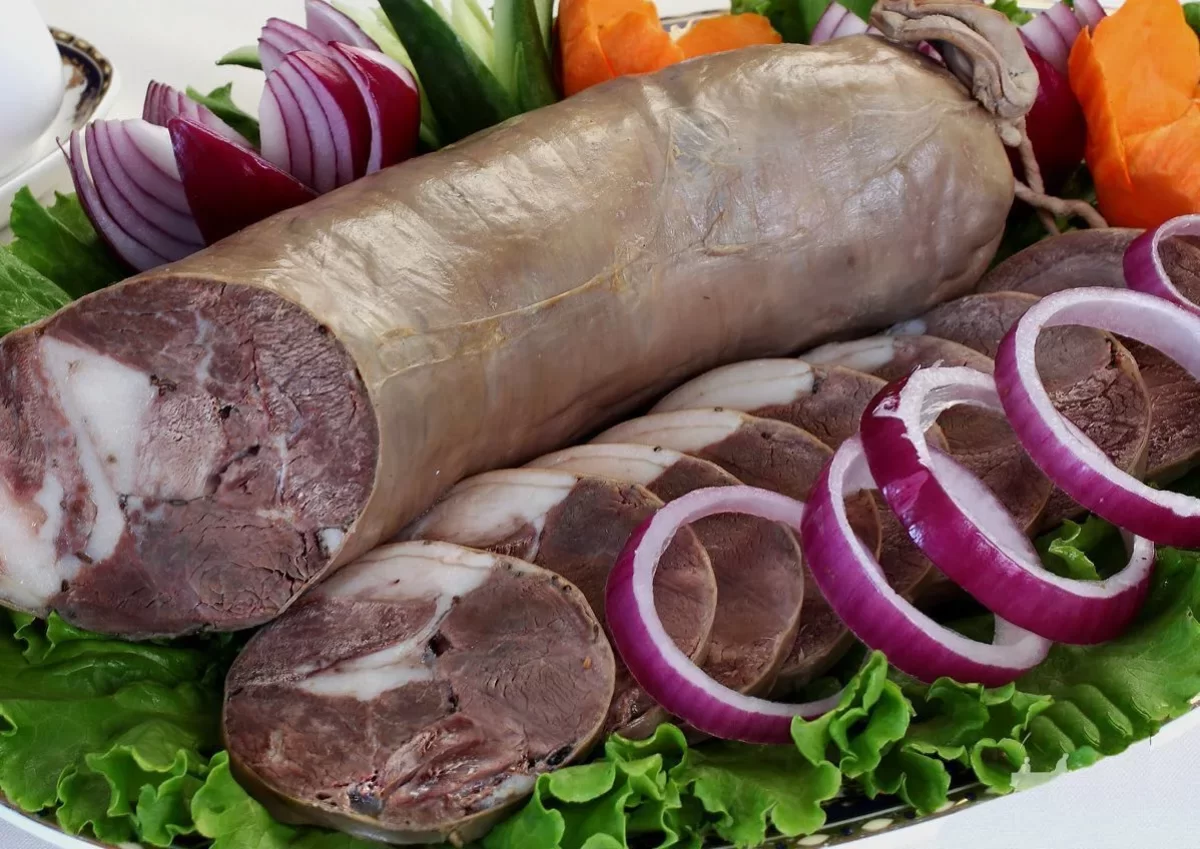
Horse meat holds a revered place in the culture, considered a clean, warming meat rich in nutrients. The most famous delicacy is kazy sausage, a premium product made from horse rib meat and fat, seasoned with garlic and salt, and stuffed into a natural casing. Unlike the generic, pink processed Cooked Sausage (often known as Doktorskaya) introduced during the Soviet era and common in modern breakfasts, horse sausage like Kazy is an artisanal delicacy served to honored guests. Another variety, Shuzhuk, uses different cuts of meat, while Karta is a rich sausage made from the large intestine.
Life-Giving Nectar: Kumis and Shubat
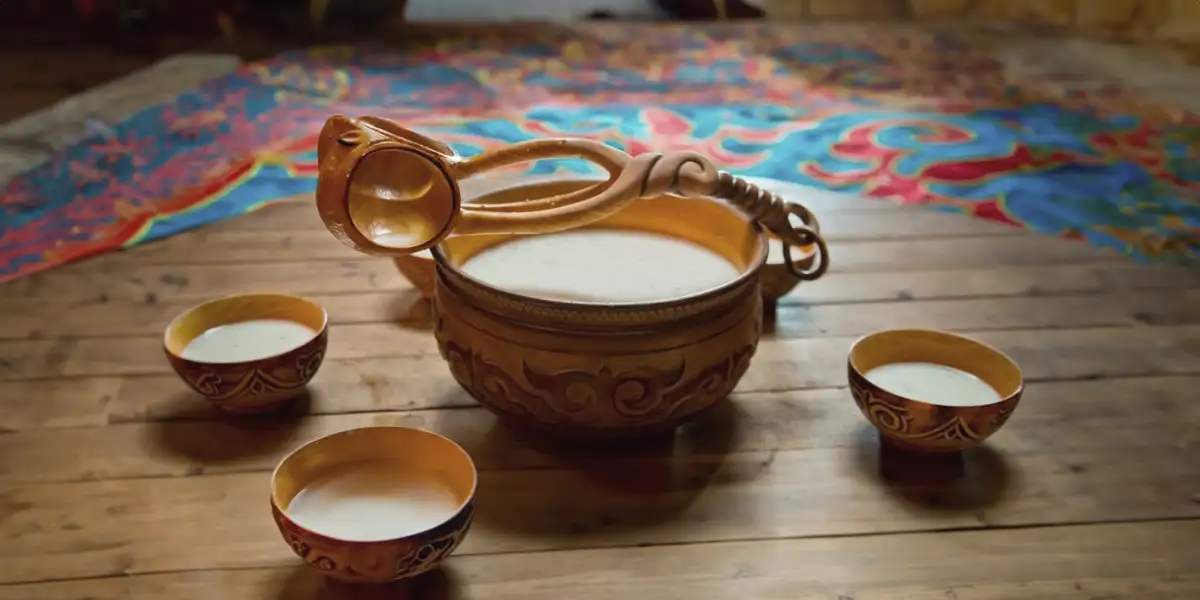
In the absence of abundant fresh water, nomadic tribes turned to fermented dairy. Kumis (fermented mare’s milk) is the most famous, known for its sour, fizzy taste and health benefits. Shubat is its creamier cousin, made from camel’s milk. The importance of dairy remains immense, with annual per capita consumption of milk and dairy products reaching 232.2 kg in 2024.
Kurt: The Ultimate Nomadic Snack
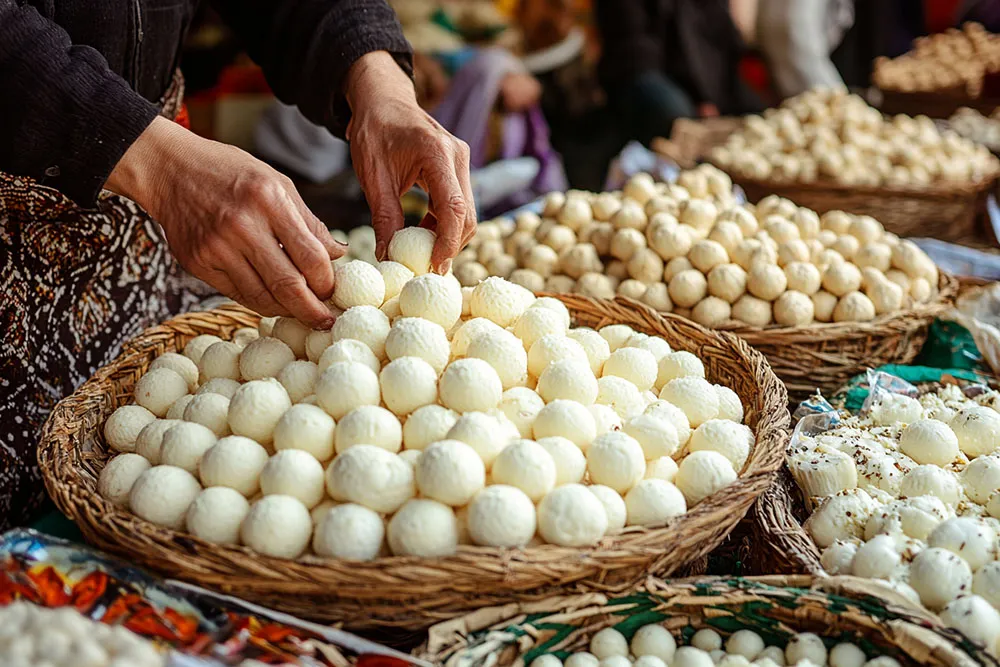
Kurt is a marvel of food preservation. These small, hard balls of dried, salted sour cheese are ubiquitous. Made by straining yogurt (ayran) and drying it in the sun, kurt is nutrient-dense and shelf-stable, making it the perfect fuel for shepherds on the move.
Dough, Bread, and Savory Delights
While meat is the centerpiece, bread is the foundation.
Tandyr Nan and Baursak

Bread is sacred in Kazakhstan. The most iconic is tandyr nan, a round, leavened flatbread baked in a clay oven (tandyr). It has a dense, chewy texture and is often decorated with stamped patterns. Its production is supported by the country’s massive agriculture sector, which saw a record harvest of 26.7 million tons of grain in 2024.
Baursak – golden, puffy pieces of fried dough – are a mandatory symbol of hospitality at any celebration, synonymous with warmth and family.
Manti, Samsa, and Lagman: Silk Road Gifts
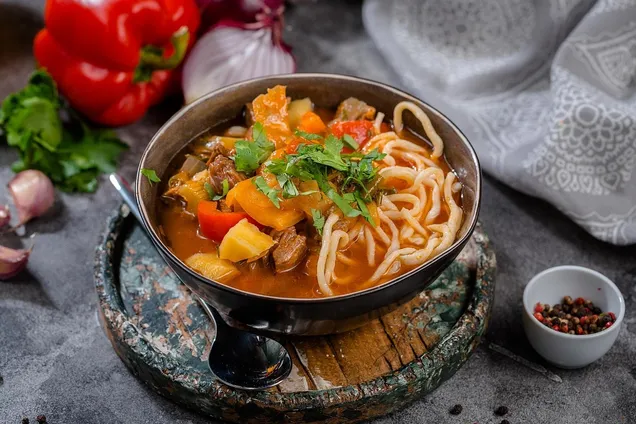
The influence of the Silk Road is visible in the popularity of dough-based dishes. Manti are large steamed dumplings filled with spiced meat and pumpkin. Samsa are flaky, baked pastries filled with meat and onions, a staple street food. Lagman, a hearty noodle dish with roots in Uighur cuisine, features hand-pulled noodles in a rich meat and vegetable stew, showcasing the deep cultural fusion of the region.
A Symphony of Flavors: Neighboring Influences
Modern Kazakhstani foods are a blend of nomadic traditions and cross-cultural exchange.
Uighur and Dungan Contributions
Uighur cuisine has deeply enriched the local palate with dishes like lagman and the use of savory spices like star anise and cumin. These flavors have become so integrated that they are now considered staples of the national diet.
The Russian Table
Centuries of shared history have left an indelible mark. Russian cuisine introduced salads, soups, and preserved vegetables to the steppe. Dishes like borscht and Olivier salad are now commonplace, adding variety to the heavy meat-and-dairy diet.
Beyond the Traditional Plate: Regional and Modern Trends
The culinary landscape is dynamic, where ancient recipes meet modern innovation.
Authentic Experiences: The Assy Plateau
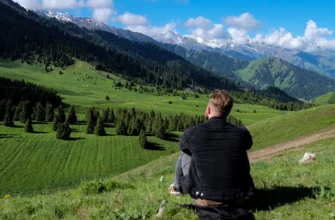
For a taste of the true nomadic lifestyle, travelers should venture to the Assy Plateau. Here, in the high alpine meadows, you can find authentic yurts and shepherds grazing their herds just as their ancestors did. It is the perfect place to experience traditional nomadic hospitality, sipping fresh kumis and eating simple, hearty meals under the open sky.
The Evolving City Scene: Fast Food and Neo-Nomads
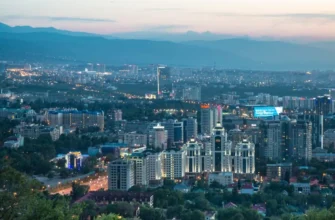
In major cities like Almaty and Astana, the food scene is modernizing rapidly. A “neo-nomad” movement sees chefs reinventing classics, serving gourmet burgers with horse sausage patties or refined presentations of Beshbarmak. Simultaneously, the pace of life has led to a boom in fast food joints, both global chains and local startups, catering to a younger generation while often incorporating local flavors.
Dastarkhan: The Sacred Tradition of Hospitality
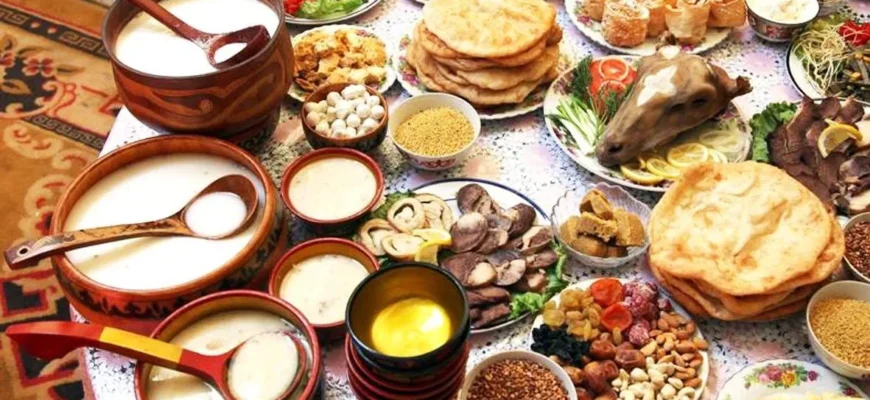
The most enduring legacy of the culture is the dastarkhan – the traditional dining spread. For nomadic people, sharing food was a sacred duty. A guest is never allowed to leave hungry. This tradition involves endless cups of black tea (shai) served with milk, dried fruits, nuts, and baursak, followed by heavy meat courses.
Conclusion
The food of Kazakhstan is a powerful narrative of a nation’s journey. It speaks of the resilience of the nomadic ancestral heritage, the rich cultural exchanges along the Silk Road, and the dynamic spirit of a modern country. From the communal joy of Beshbarmak to the sun-dried ingenuity of kurt, every dish tells a story. As Kazakhstan continues to grow as a culinary destination, its traditions offer a unique window into the soul of Central Asia.