Your Gateway to Space History and Live Launches
Stepping onto the dry land of the Kazakh Steppe feels like going both back in time and ahead to the future. This is the Baikonur Cosmodrome. It is a huge, hidden city centered on science and the birthplace of human space exploration. For a long time, people spoke its name with wonder and linked it to the start of the space age. Now, this famous spaceport lets a small group in. It gives you the chance to stand where past explorers once stood and to feel the thrill of seeing a live rocket launch.
This guide is your main source of info – it is a clear manual to help you plan a trip to see important moments in space history. You will need to get ready for this trip. You have to book your International Air tickets and also settle your Tour payment. If you do these steps well, you will get to see things few people ever see.
You may follow every move of the Soyuz MS-28 or check out the next Progress MS-33 supply mission. You will feel the ground shake when people go to space. This is more than just a regular trip.
The Legacy of Baikonur: Where Human Spaceflight Began
Baikonur is more than just a place to launch rockets. It is the main launch site for space missions. It began in 1955 as a secret test area for the Soviet rockets (at the first R7 launch site). Baikonur soon became the center of the Space Race. Here, Sputnik 1 went into space in 1957. Four years after that, Yuri Gagarin started his famous trip from Gagarin Start (Site 1). He was the first person to go around the Earth.
While Gagarin’s Start (known locally as Гагаринский стартовый комплекс) has been officially retired and will become a museum complex in 2025, the site still has a big place in history. Every big moment in the Soviet and Russian space program (космическая программа) began here. It is the first and biggest spaceport in the world that still works, where old stories from the Cold War mix with the regular beat of today’s space missions.
Why Baikonur? The Allure of a Live Rocket Launch
While other spaceports are getting more attention, like the new Vostochny Cosmodrome in the Russian Far East, Baikonur is still special. It has deep history, old customs, and is filled with real moments. Going there is like taking a trip that is important for what it means. What makes it feel different is taking part in traditions that have been around for many years. You get to see cosmonauts plant trees along the Avenue of Heroes. You can also watch the strong Soyuz rocket move to the launch site by train, guided by the Earth Orbit railway station network.
This is not a shiny theme park. It is a tough and real trip into the busy world of Roscosmos. You may talk about hydrometeorological data with the engineers. You could also hear about the launch system that makes sure everything is safe when the rocket goes up.
The Unforgettable Spectacle: Witnessing a Live Rocket Launch
The best part of visiting is seeing the launch. You can feel the huge power. It is a mix of engineering and careful work.
The Thrill of the Countdown: From Rollout to Liftoff
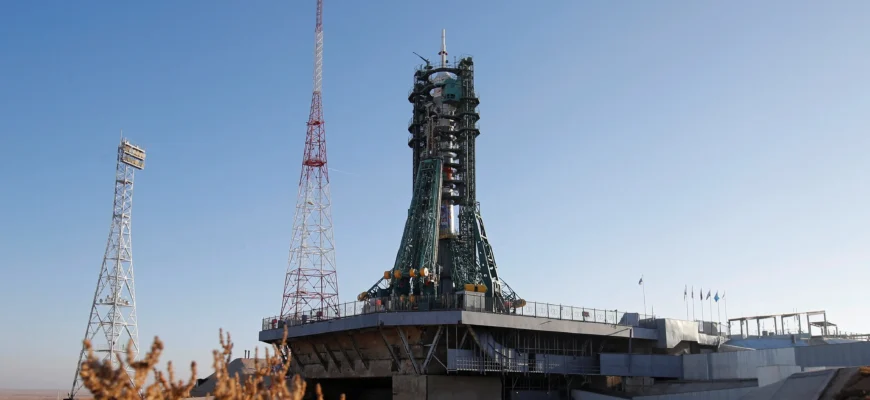
The experience starts several days before the countdown. One of the most well-known events is when the launch vehicle comes out. The big rocket is loaded sideways on a special train. It is moved slowly from the assembly building to the launch pads (запусковые площадки). People feel something strong when they see this slow and careful progress. When the rocket gets to the pad – it could be launch pad No. 31, which is used often for crewed flights, or launch pad No. 81 for big rockets – it is lifted up with hydraulics to stand straight, ready for launch.
On launch day, people come to see cosmonauts who are ready for their journey. They wear Sokol spacesuits and give their last reports. As the countdown begins, feelings run high. You see the bright light from the rocket engine (ракетный двигатель) when it starts, even before you hear anything. Soon, a loud, deep sound shakes your chest as the rocket goes up. It climbs into the sky on a bright line of fire.
Understanding the Missions: What You’ll See Launch
As of late 2025, the launch schedule is robust.
- Crewed Missions: The Soyuz MS spacecraft is still seen as the best way to get people to space. The newest flight, Soyuz MS-28, lifted off in November 2025. A mixed group, with one NASA astronaut, went with it to the International Space Station (ISS) for the ISS-74/75 expedition.
- Cargo Missions: You will likely see a Progress MS-33 launch on December 19, 2025. This important flight will bring food and supplies to the ISS.
- Satellite Missions: Big rockets like the Proton-M launch vehicle are still at work. A good example is the Elektro-L No.5 weather satellite, which is meant to head to Geostationary Orbit around the middle of December 2025. There, it will send back key Earth Science data.
- Future Tech: Baikonur is changing. Building and testing are happening on the new Soyuz-5 launch vehicle and the Baiterek complex. This marks a new chapter for the spaceport.
Prime Viewing Spots: Getting Close to the Action
Tour groups usually go to a spot that is a little more than a mile away from the Soyuz launch pad. Here, you can watch the spacecraft move across the sky. While you see it happen, screens show the live stream and telemetry system (система телеметрии) data. This shows the rocket’s key details as they happen.
Baikonur’s Storied Past: Buran and the Heavy Lifters
To go to Baikonur is like stepping into history. One main place to see is the Energia Buran complex. The Buran space shuttle was made in the Soviet Union as their reply to the American shuttle. It is a top achievement in aerospace built by Tushinskij mashinostroitelnyy zavod.
Even though the Buran flew just one time in 1988, people still remember it today. You can visit the Buran Museum at Site 2, where you will find a full-size model of the Buran. Close by, people tell stories about the Antonov 225 Mrija, the huge plane that was made to carry the Buran. You will also see the Zenit MIK, the big building where workers used to get the Zenit and Energia rockets ready. You can take a look at the model OK-GLI (the test plane) or see the other things on display. These visits help you feel how big and important the program was.
Museum of Cosmonautics: Artifacts and Archives
The Museum of Cosmonautics is full of many interesting things. You can see all kinds of items here, from the first Sputnik satellites to the burnt descent modules of Soyuz MS spacecraft. When you walk outside, you will find outdoor displays. These have different rocket complexes (ракетные комплексы) and engines that were made by NPO Lavochkin. The museum helps people see how things changed, going from the old R7 launch site and into the new cryogenic center (криогенный центр) buildings.
Beyond the Launch: Exploring Baikonur Cosmodrome Facilities
The cosmodrome infrastructure (инфраструктура космодрома) is like a city on its own. A guided tour lets you see the launch system (запусковая система) that people need to get out to space.
International Space School
A special stop on the trip is the International Space School in Baikonur city. At this place, students learn about rockets and space. People who visit often get to launch small rockets with the students. This fun moment shows how the next group of engineers is growing.
Planning Your Expedition: The Practicalities
A trip to Baikonur needs a lot of advance planning. This is because it is a closed place.
- Timing Your Visit: Make sure to look at the real-time schedule for upcoming launches. Spring and autumn are the best times to go. These seasons help you stay away from the steppe summer heat.
- Choosing Your Tour Company: The only way in is with licensed agencies. Companies like Cosmo Travel are good at setting up trips, handling things like your Rocket Launch tour program and getting your security pass ready.
- Permits and Visas: You need a Russian visa (because this city is ruled by Russia) and, based on your home country, you might need a Kazakh visa too. Your tour company can help you get the needed access papers.
- Logistics: Most people fly into Kyzylorda airport (KZO) and then go by bus to the city. There is also the Earth Orbit railway station (Tyura-Tam) that takes you right into town.
Accommodation & Local Life
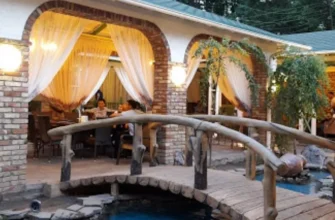
You will probably stay in a hotel like the Sputnik or Tsentralnaya. For food, you can enjoy good local Russian and Kazakh dishes. A place many people go to is the Khutorok cafe. People like the big meals and cosmonaut-themed decorations there. The city is by the Syr Darya River, so you can find a calm place to think about what you saw that day.
Regional Excursions: Beyond the Spaceport
If you get some extra time, there is a lot of cultural history in the area.
- The Aral Sea: This place has a sad story but you will find it interesting. You can get here by a long drive or by plane.
- Turkistan: Stop by the mausoleum of Khawaja Ahmed (also called Hodja Ahmed Yassavi). This is a UNESCO World Heritage site and shows off old Tymurid Empire buildings.
- Natural Parks: Some tours will let you add a trip to the Valley of the Balls (Torysh) in Western Kazakhstan. You will need special permits for the parks and will have to travel a bit more.
- Astana: You might have a flight that stops in this capital, and can visit the Khan Shatyr entertainment center. This is a tent-shaped building made with new style.
Conclusion
A trip to the Baikonur Cosmodrome (Байконурский космодром) is not just any trip. It is a way to see where the journey to space began. You can visit the International Space School and stand by Gagarin’s Start, a place filled with deep meaning. When you watch a Soyuz-5 or Proton-M rocket lift off, you feel the power. You are there to see how people push to explore space. You are not only watching. You feel part of something big.